A convincing image can still contain measurements that are unsuitable for a particular task. Quality control asks whether the inputs, transformations, and outputs meet the requirements of the intended application. This perspective follows evidence through the workflow, from acquisition metadata and reference observations to the final interpretation. It encourages teams to define acceptance conditions before seeing the result, rather than adjusting them to favour a preferred conclusion. The purpose is a repeatable way to distinguish usable observations, observations requiring qualification, and observations that should be excluded from a decision.
This working guide considers building a spacecraft power and energy budget within ground-station data delivery. The immediate decision is to test delivery of usable observation products. Useful reference evidence includes transfer records, acquisition metadata and complete product checks. The case is an illustrative planning context, with assumptions to check against the actual sensor, landscape and project requirements.
The setting: Ground-station data delivery
A ground-station workflow connects acquired observations with the data products a user eventually receives. Successful communication is one part of that chain, while completeness, timing, processing and interpretation determine whether the observation is useful. Define what the delivery system must preserve, including acquisition identifiers, instrument settings, timing and the metadata needed for later calibration or geolocation. A received file should not automatically be treated as a complete and ready-to-use image product.
A test sequence should follow data from a known input through transfer, storage, processing and delivery. Record missing segments, failed attempts and changes in processing state instead of hiding them behind a simple success label. The operational question may concern when an agricultural user receives a current observation or whether a researcher can reproduce a product. These uses require traceable timestamps and a clear distinction between preliminary material and the version accepted for analysis.
Validation can use controlled test data and documented end-to-end checks before any independent satellite service becomes operational. Assess whether the delivered product retains its expected content and whether failures are represented clearly enough for a user to respond appropriately. A concept timetable cannot establish actual service availability. The practical output is evidence about the delivery workflow, its measured constraints and the information users need to judge the age, completeness and processing status of an observation.
Distinguish power from stored energy
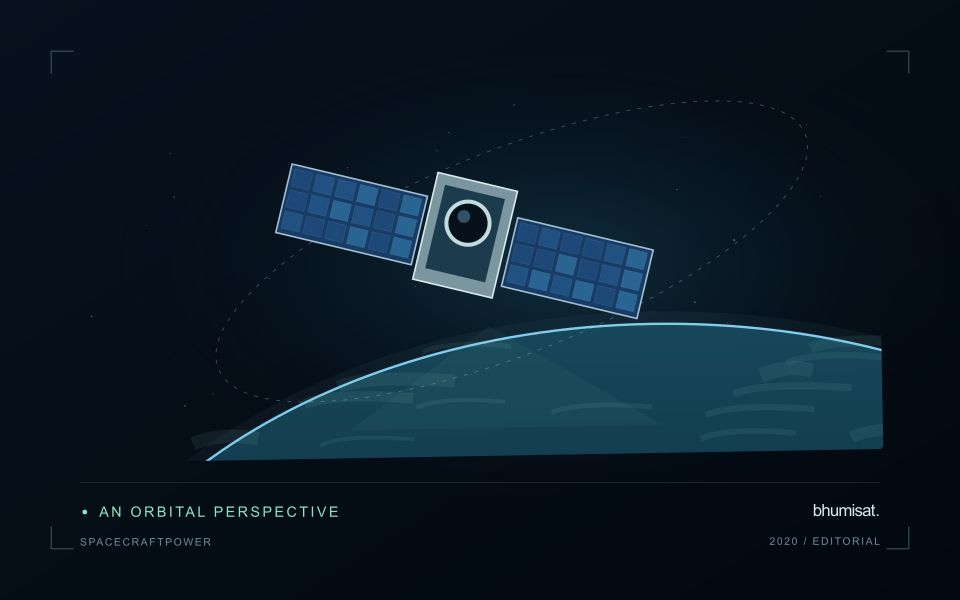
A spacecraft electrical power system must generate energy, store it when necessary and distribute it reliably to the loads. Power describes the rate of energy use, while energy describes consumption over an interval. A transmitter may have a high instantaneous demand even if it operates briefly. Conversely, a modest continuous load can dominate the daily energy budget. Both views are needed to size the system.
List operating modes and their duration: standby, imaging, processing, communication, safe mode and any relevant transitions. Include heaters, power conversion losses and supporting electronics rather than counting only the camera and radio. Identify loads that overlap in time and those that can be scheduled separately. Peak current and startup behavior can challenge distribution hardware even when the average energy balance appears comfortable.
Check realistic orbit and lifetime conditions
Solar generation depends on illumination, array orientation, temperature and the condition of the cells and associated hardware. Eclipse intervals require stored energy, and imaging or communication pointing may reduce favorable Sun exposure. Evaluate the time sequence across representative orbits rather than comparing one average generation number with one average load. Consider the expected decline in performance over the mission and apply clearly justified design margins.
Battery sizing must consider usable capacity under the planned temperature, discharge rate and cycling conditions. Nominal capacity alone does not describe what is safely available in service. Charging limits, allowed depth of discharge, ageing and monitoring requirements influence the operating envelope. Thermal design and power planning therefore need to evolve together. A heater can protect a battery while consuming the energy that the battery is expected to deliver.
The distribution system should detect and isolate relevant faults while preserving essential functions. Define which loads are shed when energy becomes scarce and what conditions allow them to return. Safe mode needs its own verified energy balance and a credible path toward recovery. Telemetry should support comparison between predicted and measured generation, consumption and battery behavior. Test the budget with realistic duty cycles, instrument startup sequences and communication sessions, then update the model using measured component performance. A defensible power plan explains the worst cases and the assumptions behind its reserve, allowing observation schedules to be adjusted before they threaten spacecraft survival.
Prioritise observations within delivery constraints
An observation has practical value only if it can reach the processing and user workflow in a suitable form and time. Delivery planning therefore belongs alongside acquisition planning. Identify the volume and priority of expected data, the opportunities available for transfer, and the consequences of delay. A system may collect more information than it can deliver promptly, so the handling of that difference should be an explicit design choice.
Define priorities using the information need rather than only the order in which files were created. A small set of timely, qualified observations may support a decision more effectively than a larger volume delivered after the relevant opportunity has passed. Preserve enough metadata to recognise each observation and its completeness during transfer. If compression, reduced products, or staged delivery are considered, evaluate how those choices affect the interpretation and subsequent processing of the information.
Test the delivery sequence with representative conditions, including interruptions and incomplete transfers. Establish how the receiving system verifies integrity, identifies missing components, and requests or schedules recovery where that is supported. Keep a record of actual delivery age and usable coverage. For a mission concept, these tests can be performed with simulated data flows before an operational claim is made. The objective is a delivery plan whose constraints are visible in the service that users receive.
Check readiness before an acquisition
An acquisition plan should consider the complete sequence needed to obtain a usable observation. Define the target, the required configuration, the timing opportunity, and the conditions under which the observation should proceed. For a spacecraft study, this includes the relationships between pointing, instrument operation, available resources, and data handling. For other observation platforms, the same principle applies: a valid measurement depends on more than the presence of a suitable sensor.
Use a readiness checklist tied to the intended acquisition rather than a generic declaration that the system is available. Confirm the relevant configuration, geographic information, time references, storage capacity, and expected data products. Identify conditions that require postponement or a revised plan. Where resource estimates are uncertain, state the assumption and test its consequences before treating it as an operational margin.
Review the acquisition after it occurs or after a representative simulation. Compare the planned sequence with the evidence actually produced, including metadata, coverage, and quality information. Record incomplete acquisitions as useful evidence about the workflow rather than silently excluding them from the record. Repeated reviews can reveal whether a limitation arises from planning, platform behaviour, instrument operation, or processing. This creates a disciplined route from an observation opportunity to a dependable measurement capability.
Bring the evidence back to the decision
Quality control is most useful when its results travel with the information being delivered. Preserve the reasons for accepting or rejecting an observation, and expose limitations that could change the user's interpretation. Review recurring failures as clues about the design of the workflow. A clear quality record supports consistent comparisons between operators and processing versions, while helping the team decide whether a problem originates in acquisition, preparation, interpretation, or the underlying observation requirements.
Sources & further reading
Explore the bhumisat spacecraft concept and our vision towards 2030, or return to the journal.