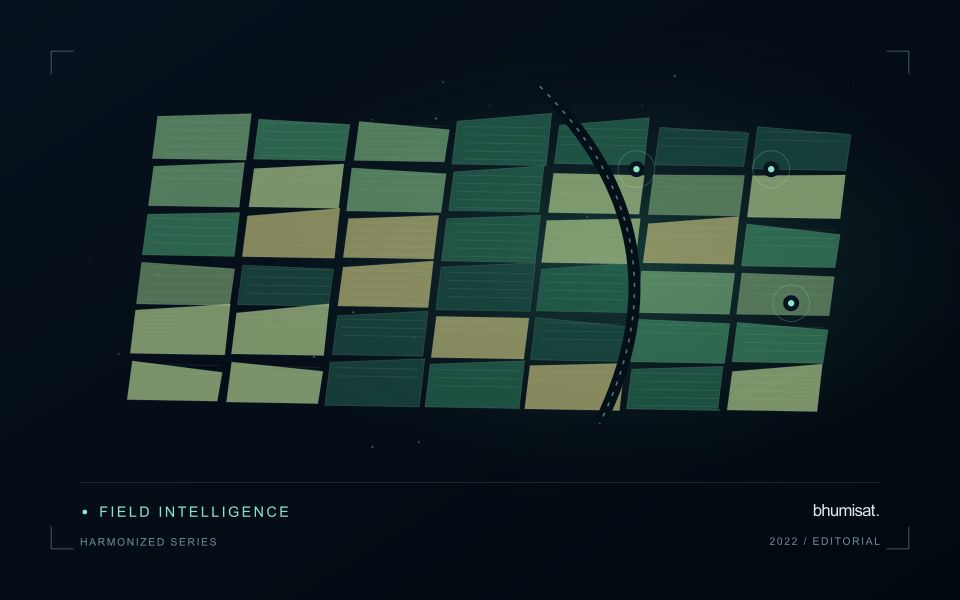
A workflow that succeeds on a small study area may encounter different constraints when the number of observations, locations, or users increases. Scaling requires attention to processing capacity, data organisation, reference coverage, and the effort needed to review results. This perspective looks beyond whether a calculation can run on a larger dataset. It asks whether the complete service can preserve its meaning, quality, and delivery commitments as its scope expands. The objective is a design that identifies bottlenecks early and increases throughput without silently weakening the evidence available to users.
This working guide considers keeping earth observation data usable over time during payload integration studies. The immediate decision is to plan integrated payload test sequences. Useful reference evidence includes measured instrument responses and traceable test configurations. The case is an illustrative planning context, with assumptions to check against the actual sensor, landscape and project requirements.
Define the responsibilities around the files
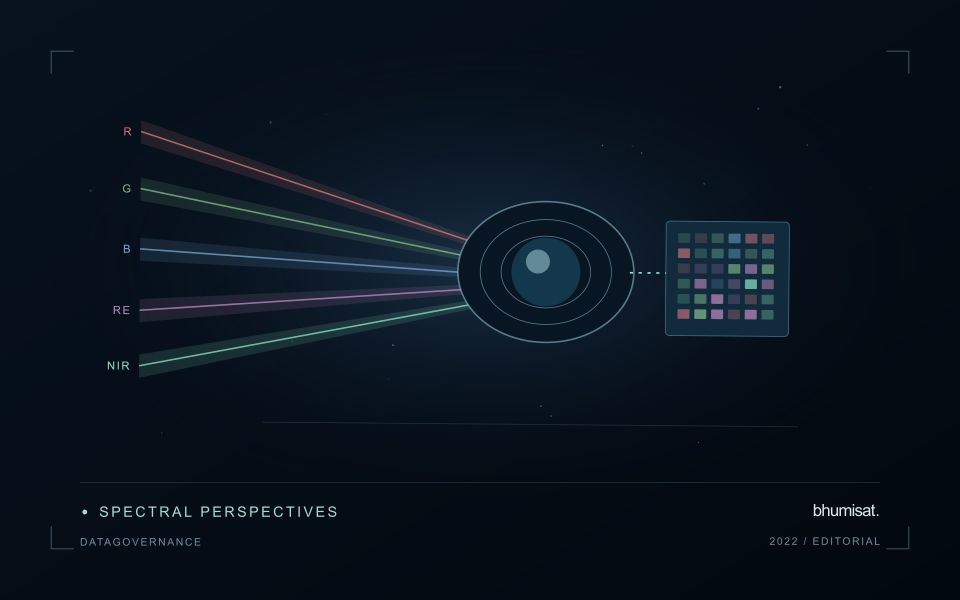
Data governance is the set of practical decisions that makes an archive trustworthy and usable. It covers who can publish a product, who maintains its description, how corrections are approved and how users discover changes. These responsibilities matter even for a small project. Without them, an attractive map may become detached from its source scenes, processing method and known limitations.
Assign stable identifiers to datasets and distinguish a collection from its individual files. Record the producer, contact route, geographic extent, time coverage, coordinate reference system, units and missing value conventions. Describe the processing level and whether the values represent measurements, corrected observations or model estimates. A clear data dictionary is especially important when a compact code or numeric flag carries a meaning that would otherwise remain implicit.
Preserve context as products evolve
Maintain provenance from source acquisition through processing and publication. Preserve source identifiers, algorithm versions, parameter settings and links to validation material. When a correction changes values, create a traceable version rather than silently replacing a file and leaving its description untouched. Explain the reason for the revision and whether earlier analyses should be revisited. Checksums help detect changes or corruption but cannot establish that a scientific interpretation is correct.
Access rules should reflect the actual data and agreements involved. Public satellite imagery does not automatically make every associated field record or derived dataset unrestricted. Location records may reveal sensitive ecological sites, and field photographs may include identifiable people. Review the relevant terms before combining or distributing sources, and express reuse conditions in plain language with a suitable license where appropriate. Preserve acknowledgement and citation requirements alongside the data.
Plan retention, backups and recovery before storage becomes crowded. Keep essential documentation and reproducible processing materials with the deliverable, while identifying intermediate files that can be regenerated. Test that a restored copy opens correctly and has the expected metadata. A release checklist should include file integrity, machine readable metadata, readable documentation and a useful contact path. Periodic stewardship reviews can detect broken links, obsolete formats and orphaned responsibilities. The aim is a product that remains interpretable after the original analyst has moved on.
The setting: Payload integration studies
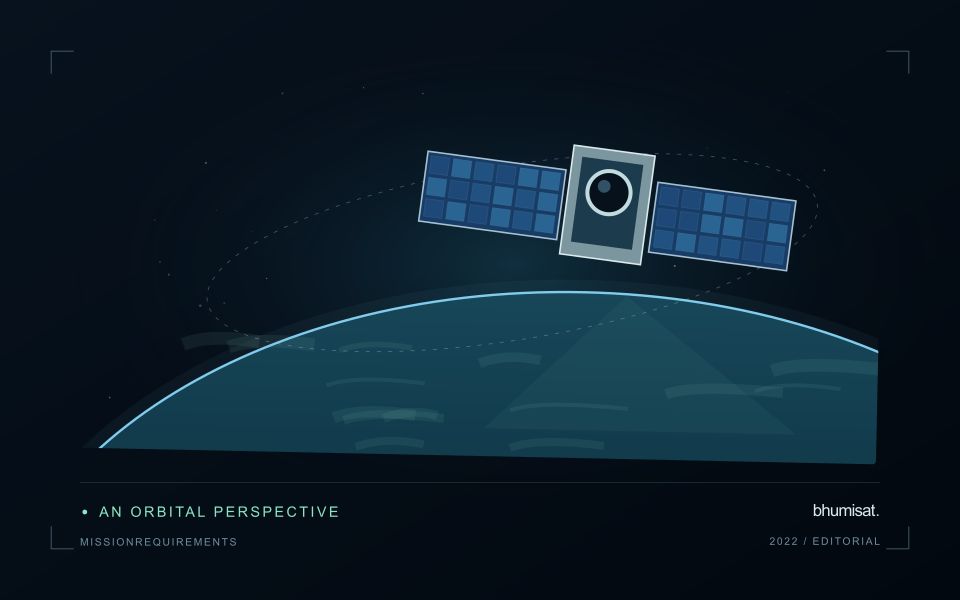
A payload integration study examines how an observation instrument behaves as part of a wider spacecraft concept. The camera, optics, electronics, structure and processing path cannot be assessed solely as independent catalogue items. Begin by identifying the measurements the complete system must support and the conditions under which they should be demonstrated. A component description can inform the design, but it does not establish the performance of an integrated imaging chain.
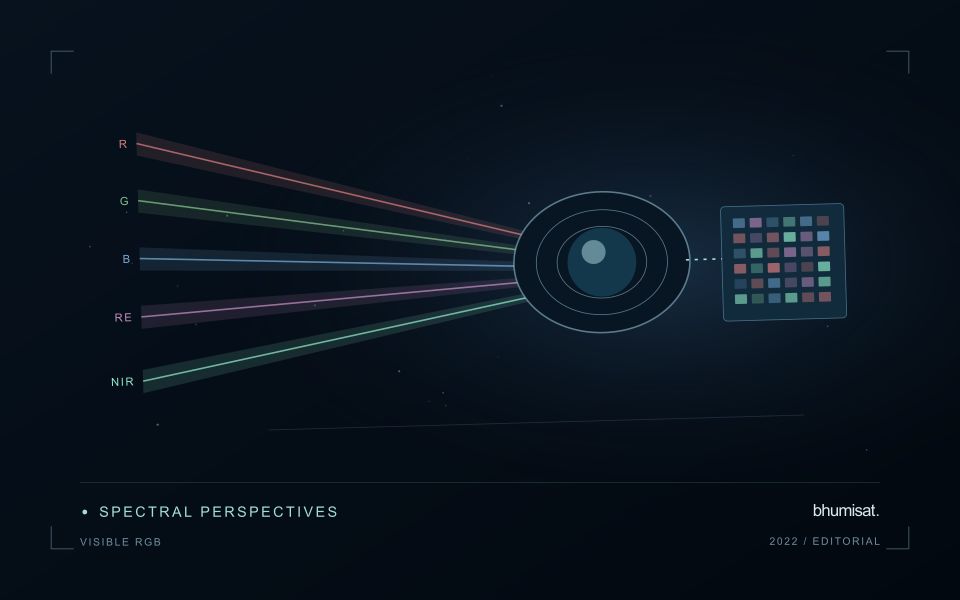
Test planning should record the hardware configuration, operating settings, reference targets and environmental conditions relevant to each measurement. Changes between tests need to remain traceable so that an apparent improvement is not confused with a different test setup. Spectral alignment, image geometry and radiometric consistency may interact with mechanical or thermal behaviour. The investigation should identify those relationships rather than relying only on whether an acquired test image looks visually sharp or colourful.
Acceptance criteria should connect instrument measurements with the needs of the intended application. Retain uncertainties, unsuccessful tests and design changes as part of the evidence used to evaluate progress. A laboratory demonstration under one condition should not be described as flight-qualified capability without the necessary additional work. A useful result at this stage is an auditable account of integrated behaviour, the remaining measurement questions and the next tests needed to assess the proposed payload architecture.
Locate the uncertainty that matters to the decision
An uncertainty budget is a practical description of where a result could become unreliable. Begin with the observation chain: acquisition, calibration, geographic matching, reference measurements, feature calculation, modelling, and delivery. Identify the assumptions at each stage and ask which could materially change the interpretation. The purpose is not to assign a precise number to every limitation. It is to locate the sources that deserve attention for the intended decision.
Separate limitations that can be measured from those that currently require a qualitative description. Repeated measurements may help characterise variability, while comparisons with independent references can reveal systematic differences. Some uncertainties interact, so combining individual error estimates without examining their relationships can produce a misleading impression of precision. Keep the method of assessment visible and avoid treating an unexamined assumption as though it were a negligible contribution.
Use the budget to prioritise further work. The largest visible source of variation is not always the one whose reduction would most improve the decision. Consider which additional observation, test, or contextual record would change confidence in an actionable way. Revisit the budget when the application, observation source, or deployment conditions change. This turns uncertainty analysis into a guide for improving the workflow rather than a qualification added only after the result has been delivered.
Match the timing of reference observations
The value of a reference measurement depends partly on how well its timing matches the observation being evaluated. A surface, crop, water body, or instrument state may change between the two measurements. Start by documenting the acquisition time of every source and the period over which the reference observation applies. Avoid treating a date entered during data upload as though it were necessarily the time when the measurement was collected.
Define an acceptable timing relationship for the application. A slowly changing structural feature may tolerate a broader comparison window than a rapidly changing surface condition. The window should be justified by the process being studied and by any available contextual records. If conditions change within that period, consider separating the observations into suitable groups rather than combining them under a single assumption of comparability.
Preserve information about interventions and events between observations. A management operation, rainfall episode, disturbance, or change in sensor configuration can alter the interpretation of a comparison. Record the event and decide whether the pair remains suitable for evaluation. Where the timing mismatch cannot be resolved, describe the comparison as qualified evidence. This is more informative than allowing an uncertain match to influence a performance statistic without explanation.
Bring the evidence back to the decision
Expansion should be guided by measured workload, visible quality conditions, and an understanding of which tasks require expert attention. Test the workflow under representative data volumes before treating a successful demonstration as evidence of operational capacity. Preserve a route for investigating individual observations even when most processing is automated. A scalable service keeps its results traceable and useful as it grows, with clear choices about where to automate, where to review, and where to invest in additional evidence.
Sources & further reading
Explore the bhumisat spacecraft concept and our vision towards 2030, or return to the journal.